
Why we're telling this story
Micador has been involved with the Mirabel Foundation for over 20 years, donating products to children who have been orphaned or abandoned due to parental illicit drug use. Those products are used in grief therapy, where children who can't necessarily talk about what happened can draw it instead, then talk about their drawings. Art gives them a creative outlet to tell their story or convey feelings words can't reach.
"Mirabel is so focused on giving these kids hope and building these communities and relationships, and that's really important to us too," says Owner and Managing Director Ben Dortimer.
Beyond product donations, Micador donates 5% of every online order, up to $5, to the Mirabel Foundation. It started small, but Micador is now deeply involved with Mirabel, as is Ben personally, he's been Chairman of Mirabel since 2014.
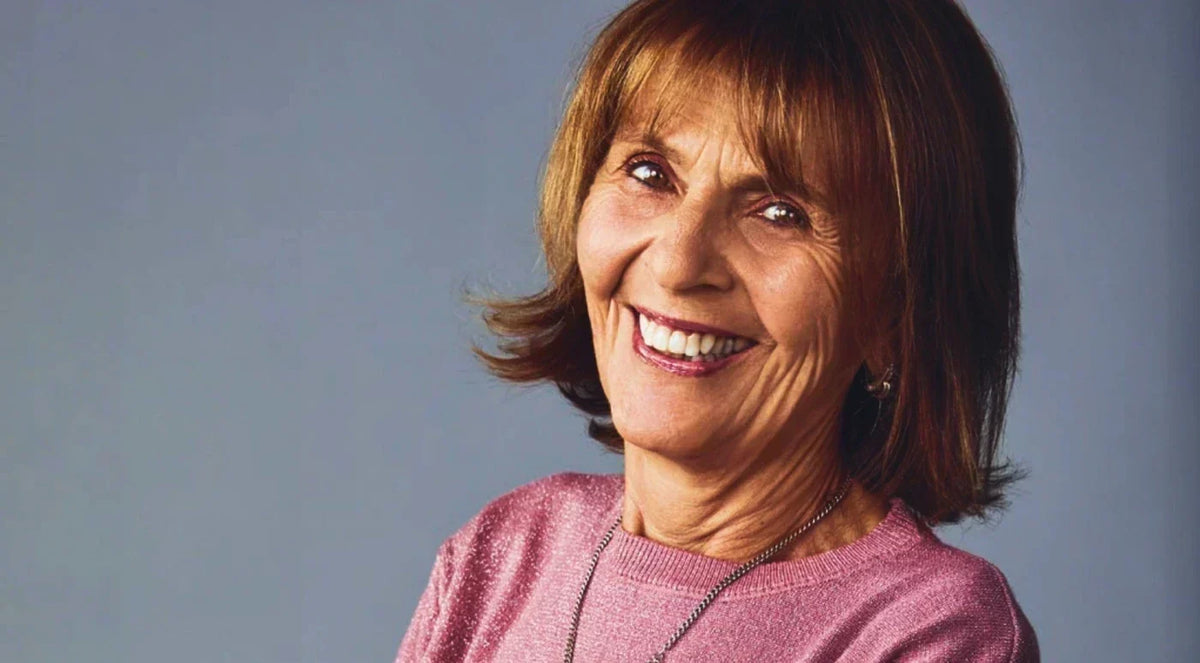
Behind the Foundation is one woman, Jane Rowe OAM, whose own journey from addiction to purpose shaped everything Mirabel does. This is her story.
The night that changed everything
In the 1990s, Jane Rowe was working as a drug and alcohol counsellor in Melbourne. One night, she knew four people who used heroin. Two survived. Two died, both women, both leaving behind children with no parent, no explanation, and no obvious place in a child welfare system built around parental inadequacy rather than parental loss through addiction.
Rowe watched these children become invisible. No agency rushed to support them. No foundation existed to acknowledge that they weren't responsible for their parent's disease.
That night planted the seed for one of Australia's most transformative charities.
From punk to purpose
Jane Rowe was born in England in the mid-1950s to a family of privilege, educated at an exclusive girls' school. Instead of a conventional life, she became a punk. In 1970s London she worked with Richard Branson at Virgin Records in its early days, right at the centre of a cultural revolution. But the same scene that fuelled her creativity introduced her to heroin, and experimentation became dependency.
She left London for Australia to rebuild her life. She arrived in Melbourne with nothing: a woman in her thirties, a recovered addict, a single mother of three. Through the 1990s she worked as a drug and alcohol counsellor, work that gave her something no qualification alone could: credibility with people trapped in addiction, and a first-hand understanding of despair and recovery.
The mission
Rowe founded the Mirabel Foundation in December 1998 with a mission stated in eight words: "Every child deserves a childhood." Addiction is a disease, not a moral failure, and the children left behind by it need more than pity. They need intervention, community, hope and agency.
She didn't wait for funding. She and a friend, Spencer P. Jones, mobilised musicians, comedians and artists for a benefit concert that raised $6,000, enough to begin. It was the same do-it-yourself, ask-your-community energy of punk, redirected toward breaking cycles of addiction.
Who Mirabel serves
Mirabel supports children aged newborn to 17 being raised by kinship carers (grandparents, aunts, uncles, siblings, extended family) because a parent has died of, or abandoned them due to, illicit drug use.
This is a hidden crisis. Kinship care placements grew from 47% of all out-of-home care in 2018 to 54% by 2022, and around 82% of those arrangements are informal, outside the formal foster system, without official support. These children carry compounded grief: losing a parent, losing their home, being taken in by relatives who are often grieving too, and facing stigma in a community that still stigmatises addiction.
As Mirabel's annual reports put it: "For 27 years, we have been true to our vow to never turn away a child in need." Over nearly 27 years, Mirabel has supported more than 1,500 children across Victoria and NSW, and every dollar invested returns $6.60 in social value.

Art at the heart
Art therapy isn't incidental to Mirabel's work, it's foundational. Children who've lost a parent often can't talk about what happened; a child who cannot say "I am angry" can paint in bold, aggressive colours instead. Art lets children externalise trauma in sensory form, creating enough distance to make it safe to process. A counsellor asking "what do these colours mean to you" is gentler, and often more effective, than asking a child to describe the day their parent died.
This is where A Rainbow of Feelings comes in, Mirabel's collection of children's grief-therapy artwork, illustrated by the children themselves. It's a direct example of the products Micador donates at work: a marker in a child's hand becomes a tool for saying what words can't.
The book: The Damage Undone
In 2006, journalist Bernadette Clohesy published The Damage Undone: Jane Rowe and the Mirabel Foundation (Lothian Books/Hachette Australia), a biography that doesn't shy away from the privilege, the addiction, the shame and the recovery. Its title captures Rowe's core conviction: damage from addiction isn't permanent. With the right intervention, at the right time, the trajectory can change.
In her own words
Much of this comes from Mirabel's own podcast, From Punk to Purpose, where Rowe speaks candidly about her journey.
On her addiction: she frames her own experience as educational rather than shameful, a lived understanding of how addiction narrows the world, and how recovery slowly rebuilds it.
On kinship care: she's been clear that it isn't a heartwarming arrangement, it's a crisis made into a virtue. A grandmother raising her grandchild after losing her own child to addiction is doing essential work, often with no support and on a fixed income.
On art as healing: she describes it as essential infrastructure, not a nice-to-have. A child who has barely spoken will paint furiously, and once the artwork exists, a trained counsellor can help them start talking about the grief inside it.
Recognition and awards
Order of Australia Medal (2019), for service to children and families. Prime Minister's Centenary Medal (2001). Victorian Honour Roll of Women (2012). Australian of the Year, Local Hero Award (2015). A Human Rights Award for her advocacy on kinship care and children affected by parental addiction.
Sources
Clohesy, B. (2006). The Damage Undone: Jane Rowe and the Mirabel Foundation. Lothian Books/Hachette Australia. Broad Radio, "From Punk to Purpose," Episode 15. Victorian Government (2012), Victorian Honour Roll of Women. Australian of the Year (2015), Local Hero Awards. Luke and Susie Podcast (2024), Episode 302. 2fold: Investing for Impact (2024), Episode 9. Mirabel Foundation Annual Reports, 2024–2026. mirabelfoundation.org.au
If you'd like to read more about how creative expression supports children through loss, see our related article, When Words Won't Come: How Art Helps Children Through Grief.


Leave a comment
All comments are moderated before being published.
This site is protected by hCaptcha and the hCaptcha Privacy Policy and Terms of Service apply.