
If you close your eyes, you can probably still see it.
The kitchen table you grew up with. Solid timber, worn smooth in the middle, wearing every scratch and stray marker line like a family history. We used to carve our names into the sides. For years I couldn't understand why Mum let us, but now, thinking of those grooves and remembering who made each one, I get it. If you let yourself, you can hear it too. Chairs scraping. Cutlery being counted out. Your mum calling everyone in, and everyone actually coming.
Homework happened there. So did Sunday roasts, birthday cakes, arguments, card games that ended in accusations of cheating, and laughter, so much laughter. If the phone rang, someone had to find the handset first, and it was never for you anyway.
Nobody called it quality time. Nobody photographed it. It was so ordinary you didn't think to hold onto it. It was just where the family was, elbow to elbow, night after night, and you honestly believed it would always be like that.
Some of us would give anything for one more dinner in the old seat, listening to the same story told the same way, pretending we hadn't heard it a hundred times.
That's the thing about tables. They were never really about the furniture.
Then, somewhere between that table and this one, things changed. Screens arrived, one per person, and the house quietly rearranged itself. One kid in the bedroom, one on the couch, a parent answering emails at the bench, the other doomscrolling. Same roof, four separate worlds. The table got demoted to the place where the washing gets folded.
That feeling you remember isn't gone. It's just waiting for a reason. And getting everyone back doesn't take a family meeting or a screen-time contract. It takes something on the table worth sitting down for.
Why making beats watching
When kids draw, they're doing something screens never ask of them: making decisions. What colour, what shape, what happens next. Every mark is a small choice, and every choice builds the quiet confidence that their ideas are worth putting down.
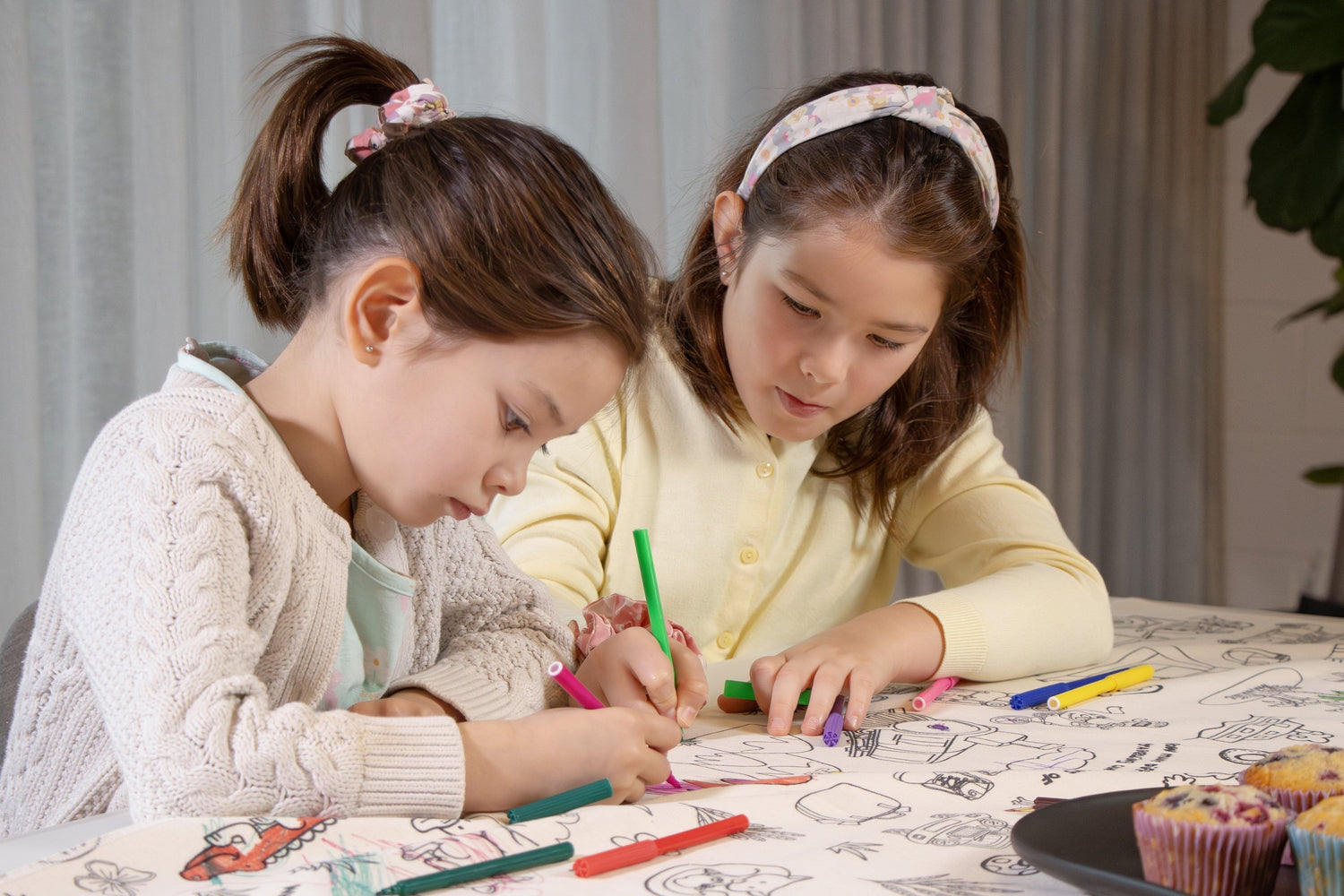
And when the whole family draws at the same table, something else happens. Conversation. Not the "how was school" interrogation kind. The sideways kind, the kind that only shows up when hands are busy and nobody is making eye contact. Ask any parent who has sat and coloured with their kids: the good stuff comes out over a marker, not over dinner.
It isn't only the kids who get something out of it, either. The parent who picks up a marker finds the same thing the kids do: a small pocket of quiet a screen never hands you, ten minutes where the only decision is which colour comes next. It feels a lot like being ten years old at your own kitchen table, back when an afternoon could disappear into a drawing.
And it isn't just a nice feeling. Researchers measured stress hormone levels in adults before and after 45 minutes of making art, and found cortisol dropped in three out of four of them. Here's the part worth pinning to the fridge: it made no difference whether they had any artistic experience. The benefit came from the making, not the talent. There's a name for that state, fully absorbed in this colour, this line, nothing else, and it's mindfulness. Drawing is one of the oldest ways in, no app required. Learn more over at Art Therapy at Home: When Kids Need a Creative Outlet.

The trick is taking the fear out of it
The reason most family art sessions end in tears (yours, usually) is the mess and the waste. Nice paper used up in ninety seconds, marker on the good tablecloth, and the whole exercise feels like it cost more than it gave.
That's the problem washable, reusable surfaces were made for. A washable mat or canvas on the table changes the maths completely. Colour it in, admire it, wash it, and it's ready to go again. Nobody is rationing the paper. Nobody is panicking about the tablecloth. A mistake isn't a disaster, it's just the next thing to wash off, and kids draw differently when nothing they do is permanent. Bolder. Looser. Happier.
Growing up doesn't mean leaving the table
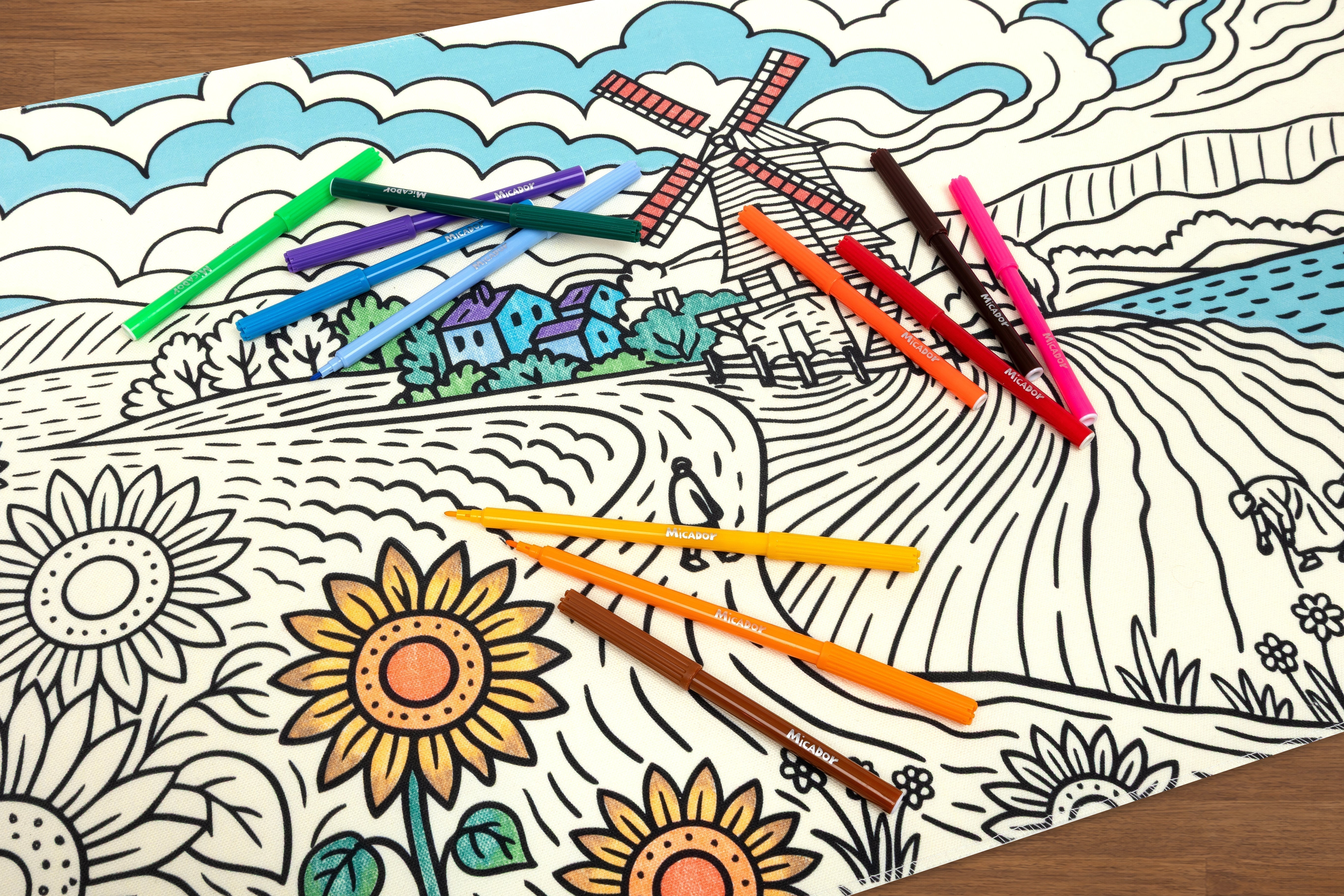
The sweetest surprise is what happens to the older ones. The tween who declared drawing "for little kids" three years ago will sit back down if the thing on the table doesn't look like it came from a preschool. And it doesn't stop at the tweens. The washable idea grows all the way up, into designs made for older hands, where the drawing winds through real art rather than cartoon dinosaurs.
Those ones are genuinely for the grown-ups too. Once the kids are down for the night, a canvas of your own on the table is the quiet, anti-screen wind-down you've been missing. The thing you reach for at the end of a long day instead of the phone.
Put one on the table on a Sunday afternoon and watch who drifts over. It's rarely who you expect.
Make the table the good seat again
You don't need an occasion for this. Any ordinary weeknight will do. A washable surface, a pack of markers, no rules about staying inside the lines. You're not scheduling an activity. You're just leaving something on the table that's more interesting than the walk to the couch.
Because one day, your kids will be the ones closing their eyes and remembering a table. Elbow to elbow, night after night. Give them one worth remembering.

Leave a comment
All comments are moderated before being published.
This site is protected by hCaptcha and the hCaptcha Privacy Policy and Terms of Service apply.